

empty
 
 
02.04.2026 12:35 AM
New Zealand Sees Sharp Decline in Business Confidence in March, Driven by Middle Eastern Conflict

The war in the Middle East, as expected, has negatively impacted consumer confidence, leading to a sharp rise in inflation expectations (up to 5.7% from 4.7% in February) and concerns about overall economic prospects. ANZ Bank has lowered its forecasts for the labor market and housing prices, with the labor market recovery postponed by a couple of quarters. Real wage growth in the private sector is expected to turn negative.

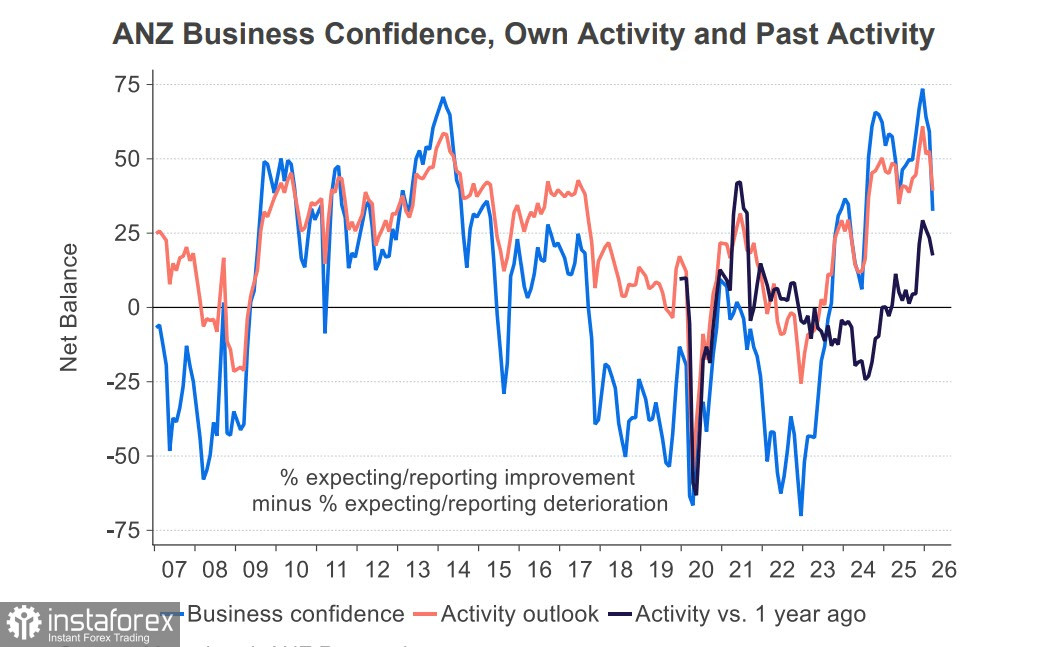
The business confidence index dropped by 26 points in March, from 59 to 33—this is also a result of the oil shock. The percentage of firms expecting price increases over the next three months rose by 7 points to 60%. The net percentage of firms expecting increased costs (85%, compared to 79%) is the highest since the beginning of 2023.

This image is no longer relevant

The government is already reacting to the shock—with a support package for rising living costs announced last week, providing a temporary payment of $50 per week to low-income working families. It is unnecessary to remind that this is yet another step toward higher inflation.

The Reserve Bank of New Zealand (RBNZ) will hold its next meeting on April 8. Bank Chief Adrian Orr has already outlined his views in a keynote speech titled "Global Disruptions on New Zealand's Shores: The Impact of the Iran Conflict on New Zealand." He perceives a jump in prices (and who doesn't?), but rates will only change if the consequences are persistent. For now, of course, that is not the case, meaning no rate change will occur at the upcoming meeting.

Key data this week is coming from the US. The private sector employment report showed growth above expectations, as did the ISM Manufacturing Index, with growth driven by a sharp increase in the price index, while employment and new orders performed worse than in February. The current surge in enthusiasm, which led to falling oil prices and a declining dollar index, can be considered a temporary phenomenon, as it is based solely on rumors and has not been supported by any real evidence.

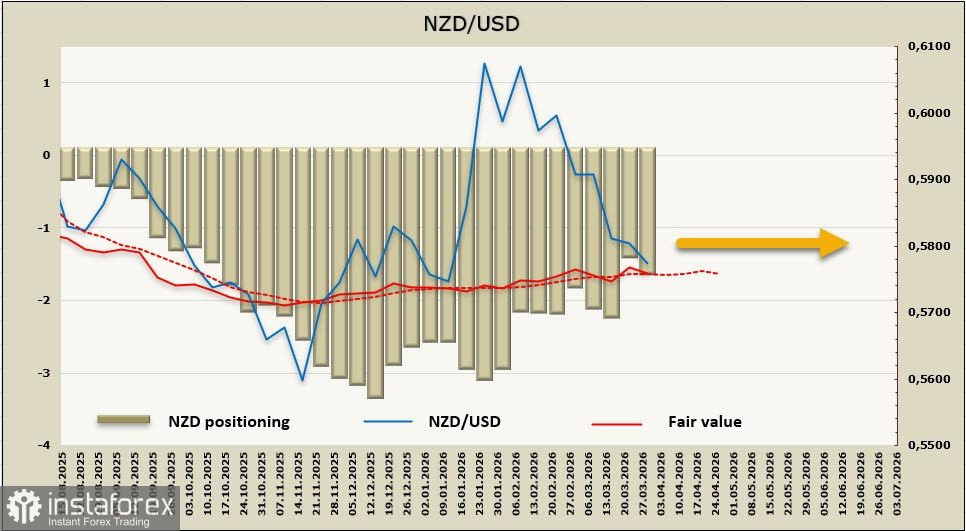
The net short position on the NZD increased by $0.2 billion over the reporting week to -$1.57 billion, with positioning remaining bearish and the calculated price lacking direction.

This image is no longer relevant

Last week, we suggested that if the conflict in the Gulf escalates, the kiwi would continue to decline towards 1.5533. This scenario has become more likely as negativity was intensified by weak New Zealand GDP data for the fourth quarter. The downward movement continues to look preferable, as the attempt at a rebound is based solely on Trump's verbal interventions about the possibility of an imminent end to the war, which lack real facts, meaning the enthusiasm rests on too shaky a foundation. We see resistance at 1.5780/5800, above which growth is possible only with an increase in optimism.

Kuvat Raharjo,
Analytical expert of InstaForex
© 2007-2026
Summary
Urgency
Analytic
Evgeny Klimov
Start trade
Earn on cryptocurrency rate changes with InstaForex
Download MetaTrader 4 and open your first trade
  • Grand Choice
    Contest by
    InstaForex
    InstaForex always strives to help you
    fulfill your biggest dreams.
    JOIN CONTEST
  • Chancy Deposit
    Deposit your account with $3,000 and get $1000 more!
    In April we raffle $1000 within the Chancy Deposit campaign!
    Get a chance to win by depositing $3,000 to a trading account. Having fulfilled this condition, you become a campaign participant.
    JOIN CONTEST
  • Trade Wise, Win Device
    Top up your account with at least $500, sign up for the contest, and get a chance to win mobile devices.
    JOIN CONTEST
  • 30% Bonus
    Receive a 30% bonus every time you top up your account
    GET BONUS

Recommended Stories

Can't speak right now?
Ask your question in the chat.
Widget callback